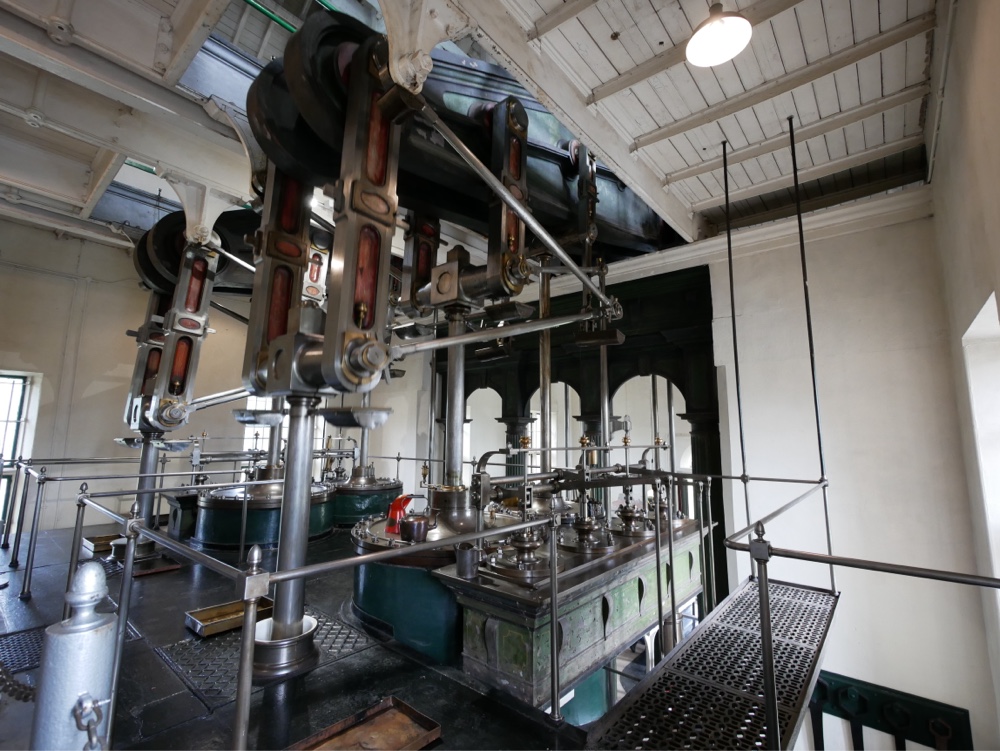
The station was built in the 1860’s to provide water for domestic and industrial use in the nearby pit villages and in Sunderland. There are two beam engines, with 4 pumps (water is pumped up around 250ft in two stages to keep the system balanced and there are two separate wells), steam is provided by 3 Lancashire type boilers, although only one is normally fired as they’re not actually pumping water so don’t need as much pressure. The engines are two cylinder compound condensing which means they’re very economical to run.
 |
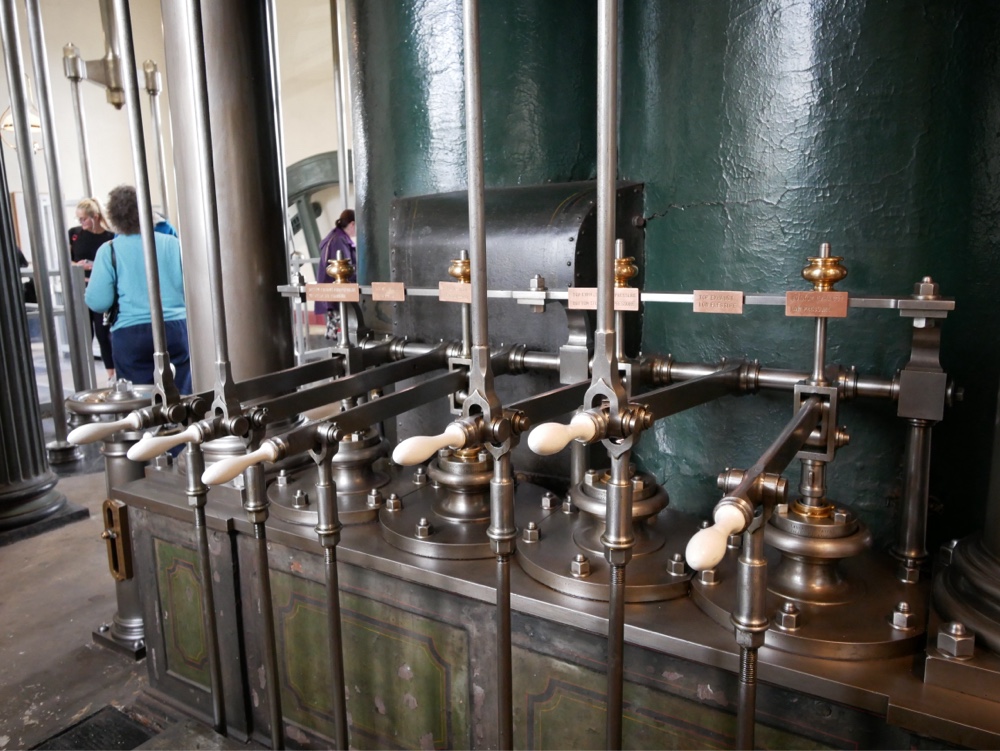 |
| Not quite what we normally think of as starting handles! They set the various valves manually for starting the engine. |
A combination of a lowering water table, which increased the risk of brackish water from the sea entering the system, the hardness of the water and reservoirs such as Derwent and Kielder being built led to the closure in the 1960’s after just on a century of work.
The small world part of the title comes from a conversation I had with one of the blacksmiths working on site, both he and his father worked at Doxfords Shipyard in Sunderland, as did my Dad and Grandpa. Even more coincidentally his Dad and my Dad both served their time in the engine works and as they’re now 91 and 90 respectively must have been there at the same time. We’re both going to ask our respective parents if they recall the other although after 70 years or so that’s unlikely.
I ended the visit with a mug of coffee and a slab (and I mean a slab, not a slice) of homemade fruit loaf with butter, for the princely sum of £3!
The second port of call (pun intended) was Seaham Harbour to visit the East Durham Heritage Centre and photograph a couple of sculptures. Oddly the car park above the harbour, by the Tommy sculpture, has a mixture of free and chargeable spaces, and I was fortunate to get one of the free ones.
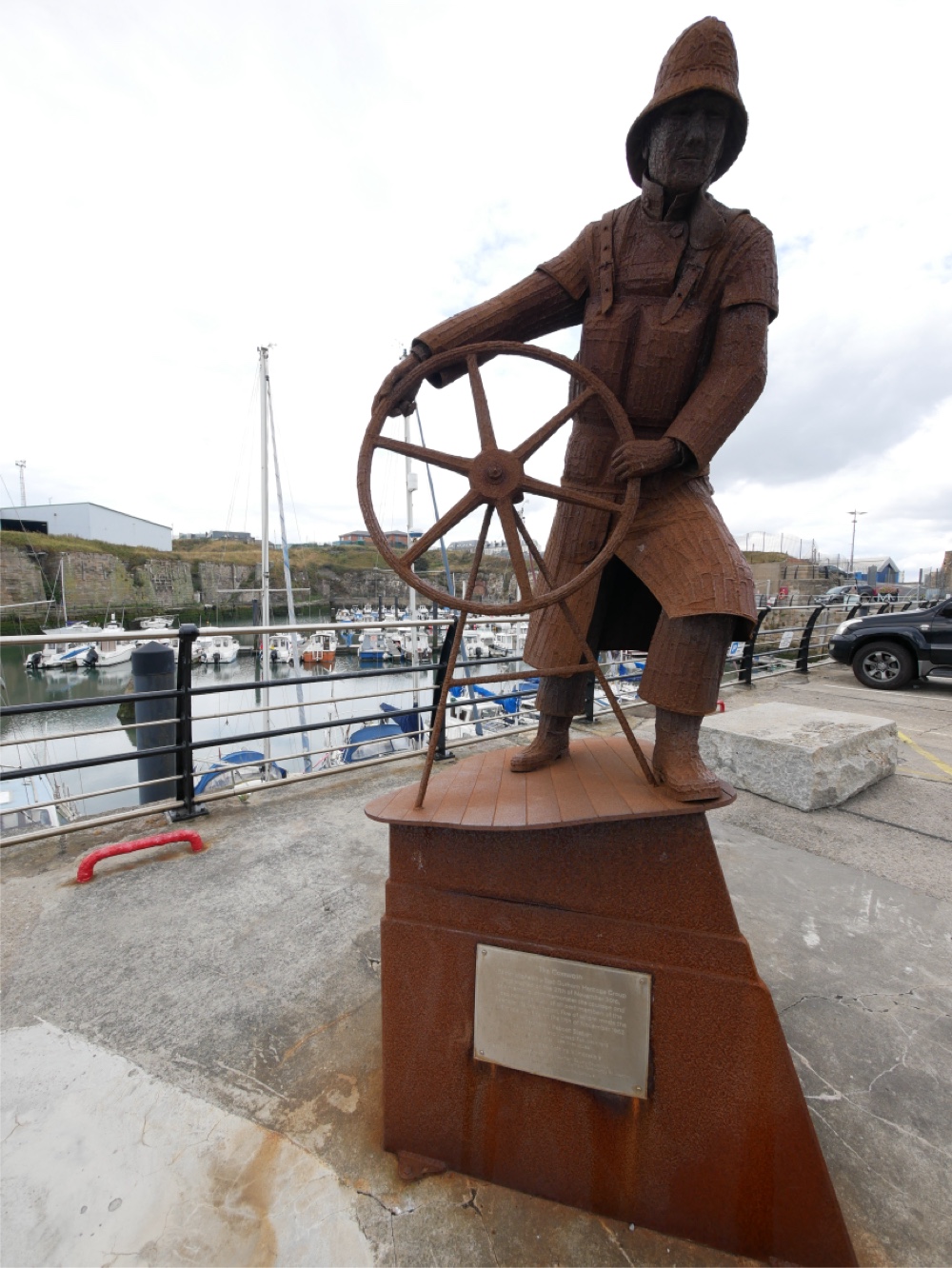 |
| The less well known Coxswain sculpture, also by Ray Lonsdale. |
The Heritage Centre’s main attraction is the George Elmy lifeboat, which has a fairly tragic story attached. We hear quite a lot about the Penlee Lifeboat Disaster of 1981 when 16 people lost their lives after the Solomon Browne tried to rescue the crew of the Union Star but the Seaham Disaster of 1962 is less well known. Five lifeboatmen and four crew of the Coble Economy were drowned with just one of the Coble’s crew surviving after the lifeboat was overwhelmed by a freak wave within yards of reaching safety.
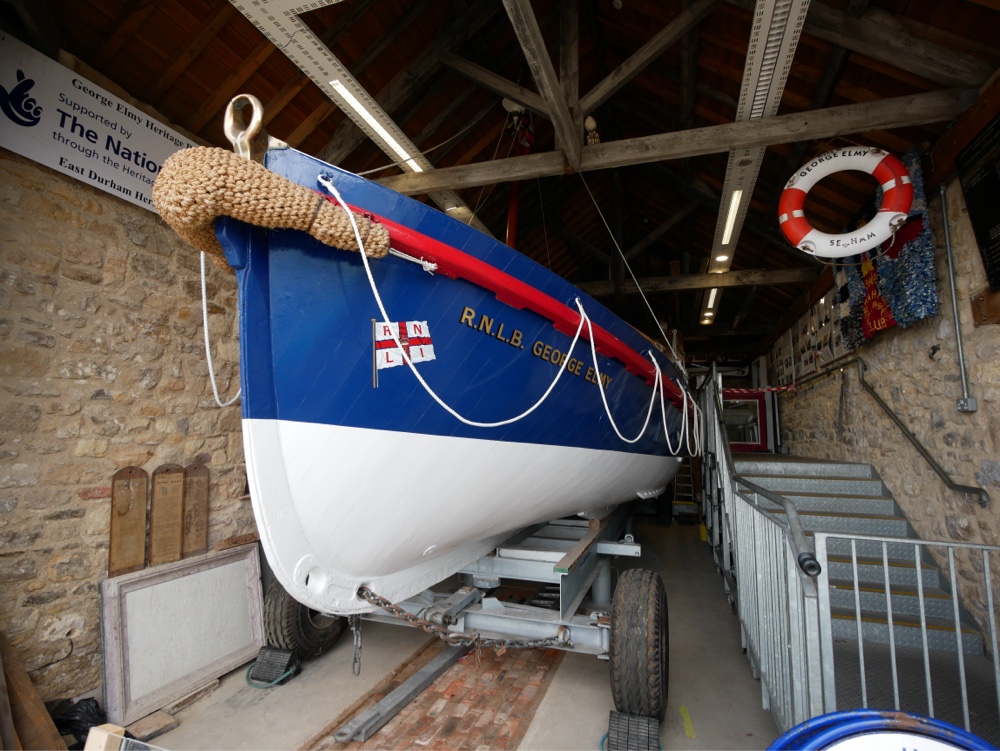 |
| The restored George Elmy. |
The lifeboat itself was washed up, retrieved and after extensive repairs used as a relief boat elsewhere for a number of years before being sold off and converted to a fishing boat. By chance a Seaham local noticed her advertised for sale and the Heritage Group were able to purchase and restore her. Seaham lifeboat station closed in 1979 as larger and faster boats came into service and could better cover the area from elsewhere.
As the hotel I’m stopping at don’t do Sunday evening meals I’d booked a table at a gastro pub the other side of the town (which is basically shut in a Sunday evening!) Sadly it turned out to be very underwhelming as neither the Black Pudding and Chorizo Scotch Egg or the Classic Parmo (breaded chicken in cheese sauce) had a lot of flavour, which takes some skill with those ingredients! Throw in the fact the place was noisy and I was quite happy the service was quick and I could get back to the hotel.

No comments:
Post a Comment